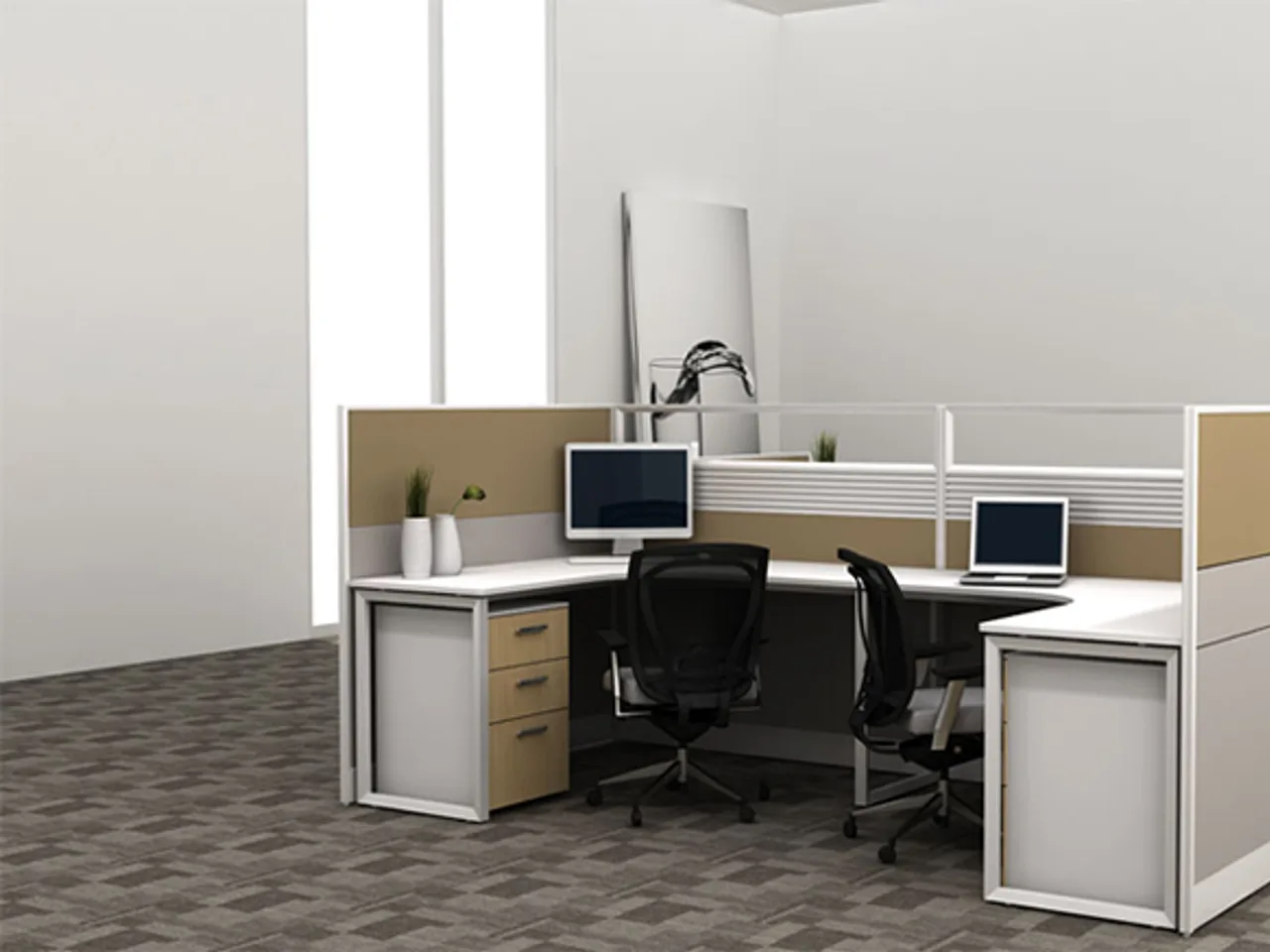
On almost every office project, cables are the last thing specified and the first thing on the snag list. The desks arrive, the IT contractor shows up, and there is nowhere clean to run forty power and data leads. A bench desk system either solves this in the frame or it does not, and that decision is made at the quote stage, not on site with a drill.
The three jobs a cable route has to do
Getting power from the floor box to the screen, along the bench, and up to each worktop is three separate problems, and a desk that solves only one of them still looks a mess. From the floor to the desk you want a leg riser or a drop, not a cable draped across the carpet. Along the bench you want a central spine tray — a steel channel under the shared worktop that takes the whole run for a row of desks. Up to the surface you want grommets or a flip-top access plate at each position so the user's leads reach the laptop without a hole drilled later. Miss any one of the three and the other two look untidy. The most common failure I see is a desk with a nice surface grommet and no spine under it, so the cables drop through the hole and then dangle in mid-air to the floor — the route solved the last 100 mm and ignored the metre below it.
Where the power actually lives
Two honest options. The cheap route is passive: trays and grommets only, and the building's floor boxes feed the desks directly. It works, it is what most budget projects buy, and the trade-off is that every reconfiguration means an electrician back on site. The better route for a serious fit-out is furniture-mounted power — sockets built into the worktop or a powered beam (the kind Legrand and similar make), so each position has power and USB at the surface and the floor box only feeds the spine. It costs more per desk and it is the right answer for a floor that gets churned, because adding a desk no longer means adding a floor box and cutting the carpet.
There is a quantity question hiding in here too. How many positions share one floor box drives how much current the spine has to carry and how the beam is segmented. Get that wrong and you either trip breakers under load or pay for far more floor boxes than the floor needed. We size the spine to the positions-per-feed you give us, so it is worth knowing that number before the desks are built.
The detail that fails inspection: capacity and access
Two boring things turn up on snag walks. First, a spine tray sized for today's cables with no slack — the project adds a second monitor and a dock to every desk a year later and the tray is full, so the new leads hang outside it and the floor looks worse than before the furniture arrived. We size the tray with headroom on purpose. Second, access: a grommet or flip-top has to actually open after the desk is loaded, not be pinned shut by the monitor arm or the back of the worktop. It sounds trivial until the IT contractor cannot reach the sockets to patch a desk and the handover stalls over a cap that will not lift. We position the access points where a loaded desk still lets you in.
The trade-off, and who terminates
Here is the line I give project buyers. We will build the route — spine, risers, grommets, and the cut-outs for whatever power module you choose. What we will not pretend is that the factory wires your building. The mains termination and the data patching are local, licensed work, and the cleanest projects decide early who owns that boundary: we supply the desk with the tray and the socket apertures, your installer drops the floor feed and terminates. Arguing about this after delivery is how a project slips a week and how a snag list grows a section that was never anyone's fault because it was never anyone's job.
How we build it in
Tell us the power module you are standardising on and how many positions per floor box, and we cut the worktops and size the spine for it before the first sample. A back-to-back bench shares one spine between two rows, which is cheaper per seat and tidier than two separate desks — the same reason it packs better at high density. We build to BIFMA/EN methods and a load test on the worktop and frame can be arranged. Send the spec through our contact form or [email protected], or see how a full layout comes together on the OEM/ODM page.